Meastro Duo: Evaluating a Groovy Font System for Display and Branding
In the vast landscape of digital typography, finding a typeface that balances distinctiveness with usability can be a significant challenge. For designers working on branding, packaging, or digital marketing, the choice of font often dictates the visual hierarchy and emotional tone of the entire project. One option that has garnered attention in the retro-design niche is the Meastro Duo font family. This system pairs a bold display typeface with a complementary script, aiming to provide a complete solution for eye-catching, vintage-inspired layouts.
When evaluating a font resource like Meastro Duo, it is essential to move beyond aesthetic appeal and consider technical utility, versatility, and workflow integration. This article explores the characteristics of the Meastro Duo, analyzes its strengths and tradeoffs, and provides practical guidance on when this specific style is the right choice for your project—and when you might need to look elsewhere.
Understanding the "Duo" Concept and Retro Aesthetics
The defining characteristic of Meastro Duo is its classification as a font system rather than a single typeface. It consists of two distinct yet harmonious styles: a solid, bold display font and a flowing, energetic script. This pairing addresses a common design challenge: ensuring that headlines and supporting text feel cohesive without looking identical.
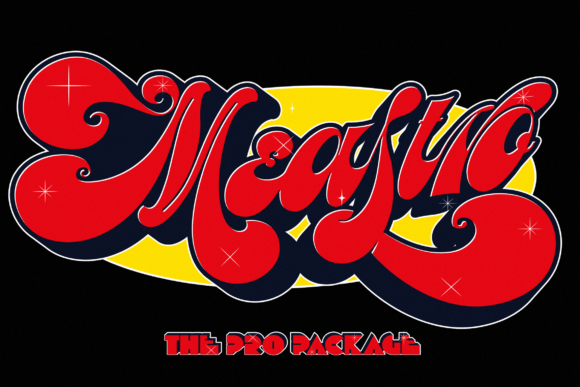
The aesthetic of Meastro leans heavily into the "groovy" era of design, reminiscent of 1960s and 70s typography. This is characterized by rounded terminals, varying stroke weights, and a sense of movement. Unlike neutral sans-serifs intended for body text, Meastro Duo is designed specifically for impact. It thrives in environments where the text needs to act as a graphic element rather than just a vessel for information.
Visual Hierarchy and Pairing
One of the primary benefits of using a pre-paired system like Meastro Duo is the elimination of guesswork in font pairing. Beginners often struggle to match a serif with a script, leading to visual dissonance. With Meastro, the structural DNA is shared. The display font offers legibility at large sizes, perfect for headers or posters, while the script variant adds a personal, handwritten touch suitable for accents, sub-headers, or short quotes.
Technical Capabilities: The PUA Encoding Advantage
While the visual style is the first thing a designer notices, the technical architecture of a font determines its long-term value. A significant feature of Meastro Duo is its PUA (Private Use Areas) encoding. For the non-technical user, this distinction is vital.
Standard fonts often restrict access to special characters, such as stylistic alternates or ligatures, to software that supports OpenType features (like Adobe Illustrator or InDesign). However, because Meastro Duo is PUA encoded, all glyphs are mapped to specific keys accessible via a standard character map. This means you can access the fancy swashes and alternate letterforms even in software with limited OpenType support, such as older versions of Microsoft Word or standard web builders.
Comparing Accessibility Features
When comparing font resources, the presence of PUA encoding is a major decision factor. Fonts without this feature may look great in the preview but become frustrating to use in practice if your primary software doesn't support advanced typographic features. Meastro Duo effectively removes this barrier, offering a "plug-and-play" experience that prioritizes user convenience.
Practical Applications and Use Cases
Choosing the right tool depends entirely on the job at hand. Meastro Duo is not a universal solution for all design needs, but in specific contexts, it offers distinct advantages. Understanding these use cases helps in evaluating whether it fits your current workflow.
- Branding and Logo Design: The bold display style of Meastro Duo makes it a strong candidate for logos, particularly for brands targeting a lifestyle, fashion, or food market that wants to evoke nostalgia or warmth.
- Merchandise and Apparel: The "groovy" aesthetic translates well to T-shirts, tote bags, and stickers. The thick strokes of the display font ensure that designs remain legible even when printed on textured fabrics.
- Event Stationery: For invitations, particularly for events with a retro or casual theme, the combination of the script and display fonts creates an immediate atmosphere of fun and celebration.
- Social Media Graphics: In the fast-scrolling environment of Instagram or TikTok, the high-contrast and unique silhouette of Meastro Duo can help stop the thumb and capture attention.
Tradeoffs and Limitations
No typeface is without limitations, and a balanced evaluation of Meastro Duo requires acknowledging where it falls short. The most obvious limitation is its stylistic specificity. Because it is heavily stylized with a retro flair, it is poorly suited for corporate, medical, or legal contexts where neutrality and seriousness are paramount.
Furthermore, display and script fonts generally struggle with readability in long-form text. Meastro Duo should not be used for body copy, lengthy descriptions, or fine print. The eye tires quickly when reading decorative fonts in large blocks. Therefore, a designer using Meastro will still need a secondary, neutral font (such as a clean sans-serif) to handle the heavy lifting of information delivery.
File Management and Formats
When acquiring resources like Meastro Duo, it is also worth considering the file formats provided. Typically, high-quality font duos come in TTF (TrueType Font) or OTF (OpenType Font) formats. While Meastro Duo is excellent for print and rasterized digital images, if you plan to use it for web design (CSS), you must ensure you have the appropriate web font formats (WOFF/WOFF2) and the correct licensing for web embedding. This is a crucial factor often overlooked during the initial aesthetic evaluation.
Comparison with Alternative Styles
When researching typography, it is helpful to compare a specific product like Meastro Duo against broader categories of alternatives to understand its relative value.
Retro vs. Modern Minimalism
Current design trends often swing between maximalism (where Meastro Duo resides) and ultra-minimalism. If your project requires a sleek, futuristic, or corporate look, a geometric sans-serif would be the appropriate alternative. Meastro is the choice for warmth and personality; modernist fonts are the choice for efficiency and objectivity.
Handwritten vs. Calligraphic
The script portion of Meastro Duo sits somewhere between a casual handwritten font and formal calligraphy. It is more structured than a child’s handwriting font but less formal than a copperplate script. This makes it versatile for casual luxury branding but perhaps too informal for high-end, traditional luxury goods (like fine jewelry or formal wear), where a more traditional calligraphy style might be preferred.
Decision Factors for the Designer
Before committing to a font system like Meastro Duo, consider the following questions to ensure it is the right fit:
- Does the project require a "voice"? Fonts convey tone. If the project needs to sound friendly, nostalgic, or energetic, Meastro Duo is a strong candidate. If it needs to sound authoritative or scientific, it is not.
- Is longevity a concern? Retro trends are cyclical. While Meastro Duo is currently aligned with popular vintage trends, consider if the design needs to last for years. Classic serif or sans-serif fonts often have more staying power.
- What is the technical environment? If you are working primarily in a web environment with custom CSS, ensure you have the skills to implement the font correctly. If you are working in standard office software, the PUA encoding of Meastro Duo is a significant advantage.
Conclusion
The Meastro Duo font package represents a specialized tool for designers looking to inject personality and retro charm into their work. Its combination of a bold display font and a matching script, coupled with the accessibility of PUA encoding, makes it a practical choice for logos, merchandise, and social media content.
However, like any stylistic font, it requires careful implementation. It works best when paired with a neutral companion font and used in contexts where its "groovy" aesthetic aligns with the brand's message. By weighing the visual appeal of Meastro Duo against the technical requirements and project constraints, you can make a confident decision that enhances your design workflow and delivers the desired impact.