Skylight: A Bold Display Font for Urban Design
In the world of design, sometimes you need to break the rules. You need a typeface that doesn't whisper but shouts, one that carries the raw, unfiltered energy of the street. This is where Skylight enters the conversation. It’s not just a font; it’s a statement piece, a graffiti-inspired display typeface engineered for projects that demand attention and refuse to blend into the background. If your current design toolkit feels too polite or corporate, Skylight offers the rebellious edge you’ve been missing.
Visual Characteristics and Personality
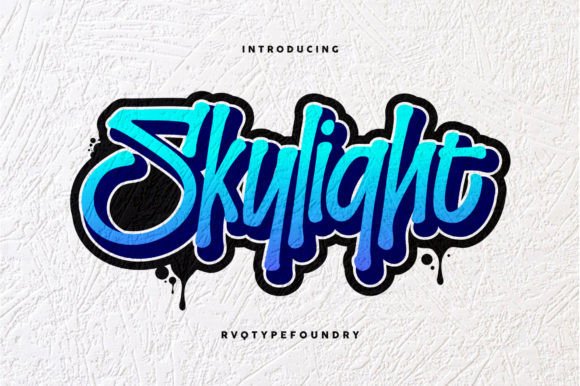
At its core, Skylight is defined by its jagged edges and intricate, chaotic details. It mimics the aesthetic of street art, where letters are often distorted to fit the texture of a brick wall or a concrete barrier. Unlike traditional serif font or sans serif font families that prioritize legibility at small sizes, Skylight prioritizes atmosphere. The letterforms feature sharp angles and uneven baselines, creating a sense of movement and urgency. This is a typeface that feels alive, vibrating with a "streetwise" personality that suggests authenticity and grit.
When you look at the typography, you aren't just seeing letters; you are seeing style. The intricate details within the characters give it a complex visual weight. This complexity is what makes it a premium choice for display work. It has the visual flair of a script font but the structural boldness of a heavy industrial typeface. It is a creative font that brings a specific mood to the table—one of confidence, rebellion, and urban cool.
Strategic Applications: Where Skylight Shines
Understanding where to deploy a display font like Skylight is just as important as the font itself. Because of its high detail and aggressive styling, it is not suited for body copy or long-form reading. Instead, it excels in high-impact environments where the goal is immediate recognition and emotional response.
Branding and Logo Design
For entrepreneurs and brand strategists, Skylight offers a distinct advantage in logo design. If you are building a brand identity for a streetwear label, a skate shop, an independent record label, or an urban photography studio, this font sets the tone instantly. It signals to your audience that your brand is edgy and culturally aware. However, when using it for logos, it is crucial to ensure that the jagged edges don't compromise the scalability of the mark. Always test the logo at very small sizes to ensure the intricate details don't turn into a visual blur.
Marketing and Social Media
In the fast-scrolling environment of social media, static content often gets ignored. Skylight is a powerful tool for creating social media graphics that stop the thumb. Use it for bold headlines on Instagram stories, YouTube thumbnails, or event flyers. Its rebellious nature works exceptionally well for limited-time offers, product drops, or announcements that need to feel urgent and exclusive. Pairing this font with stark, high-contrast photography can create a visual hierarchy that guides the viewer’s eye exactly where you want it.
Publishing and Editorial Design
While you wouldn't use Skylight for a novel, it has a place in editorial design. Think of magazine covers, pull quotes, or chapter headings in a zine. It adds a layer of texture and personality that standard typography lacks. For bloggers and content creators focusing on music, art, or culture, using Skylight for headers can help establish a unique visual voice that separates your publication from the generic templates used by competitors.
Digital and Web Design
On the web, Skylight can be used strategically for hero sections or landing page headers. It serves as an anchor for the visual theme of the site. However, web designers must be cautious. Because it is a display font, loading times and rendering can be issues if the font file is heavy. It is best used as a static image or a carefully optimized web font for headlines only. This ensures the web design remains fast while still delivering the visual punch.
Design Strategy: Pairing and Hierarchy
One of the most common mistakes designers make with expressive fonts like Skylight is failing to create contrast. Because Skylight is so loud and detailed, it needs a partner that is quiet and clean. This is where font pairing becomes essential.
Do not pair Skylight with another display font or a highly stylized handwritten font. The result will be visual chaos that is impossible to read. Instead, look for a neutral sans serif font with a clean structure and generous spacing. Fonts like Helvetica, Inter, or Open Sans work well because they recede into the background, allowing Skylight to take center stage. This contrast creates a professional visual hierarchy, where the headline grabs attention and the supporting text delivers the information clearly.
Practical Guidance for Implementation
If you are considering adding Skylight to your library of design assets, there are a few practical factors to consider to ensure you get the most out of your investment.
- Evaluating Project Fit: Before purchasing or downloading, look at your current project list. If your work involves legal documents, medical instructions, or technical manuals, Skylight is the wrong tool. However, if your portfolio includes packaging design for energy drinks, concert posters, or app interfaces for creative tools, it is a perfect fit.
- Reviewing Included Styles: Check if the font family includes variations. Does it have a bold weight or an outline version? Having multiple styles within the same personality allows for more flexibility in your designs without needing to mix different typefaces.
- Licensing and Usage: Ensure you understand the licensing. If you are a small business owner using the font for a commercial product, verify that the license covers commercial font usage, including merchandise and print-on-demand products. Respecting licensing ensures your brand remains professional and legally sound.
- Testing Readability: Always test the font with your specific content. Graffiti fonts can sometimes render specific letters (like 'a', 'e', or 's') in stylized ways that are difficult to decipher. Type out the full alphabet and your specific headline text to ensure the message is clear before finalizing the design.
The Impact on Brand Perception
Ultimately, typography is a tool for communication. The fonts you choose tell your audience who you are before they read a single word of your copy. Using a premium font like Skylight influences brand perception by positioning your project as bold, daring, and contemporary.
It suggests that your brand understands modern typography trends and isn't afraid to stand out. In a market saturated with safe, minimalist designs, a font with jagged edges and streetwise energy can be the differentiator that makes your brand memorable. Whether you are designing for print or digital, Skylight offers a way to inject personality and authenticity into your work, making it a valuable asset for any designer looking to make a statement.