The Organic Edge: How Salting Font Bridges Handcrafted Authenticity and Modern Branding
In the current digital landscape, a paradox exists at the heart of design and marketing. While technology allows for unprecedented precision and pixel-perfect uniformity, the human eye craves imperfection. We are witnessing a significant shift away from the rigid geometric sans-serifs that dominated the last decade of web design toward typography that feels tactile, personal, and deeply human. This is where Salting, a handwritten display font, enters the conversation. It is not merely a typeface; it is a response to a cultural craving for natural aesthetics in an increasingly synthetic world.
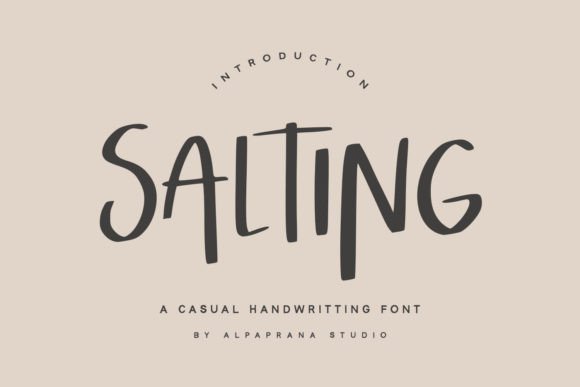
Salting is characterized by its fluid, handwritten strokes that strike a delicate balance between organic irregularity and modern legibility. Unlike traditional script fonts that can often feel overly formal or difficult to decipher, Salting offers a natural and modern feel. It captures the essence of a quick, confident jotting—the kind of writing you might find in a designer’s sketchbook or on a café chalkboard. For professionals ranging from freelance designers to marketing directors, understanding how to leverage this style is becoming a critical skill in visual communication.
The Psychology of the Handwritten Stroke
Why are professionals paying such close attention to fonts like Salting? The answer lies in consumer psychology and the erosion of trust in corporate gloss. In an era defined by AI-generated content and algorithmic curation, audiences are becoming hyper-sensitive to authenticity. A perfectly uniform typeface can sometimes feel cold or automated, whereas a handwritten font signals that a human being is behind the message.
This trend is deeply rooted in the maker movement and the rise of independent entrepreneurship. As more creators, freelancers, and small business owners enter the market, they require branding tools that reflect their personal touch. Salting fits this niche perfectly. It conveys a sense of approachability and warmth that rigid corporate fonts cannot replicate. When a consumer sees a logo rendered in Salting, the subconscious association is often one of craftsmanship, care, and bespoke quality.
Salting in the Context of Modern Workflows
The relevance of a font like Salting is also tied to the changing workflows of modern creatives. The lines between digital and physical are blurring. We see this in the resurgence of stationery, the popularity of digital planning apps that mimic paper, and the "scrapbook" aesthetic dominating social media platforms like Instagram and Pinterest.
Salting serves as a bridge between these worlds. It brings the warmth of physical handwriting into the digital realm without sacrificing the scalability required for modern media. Whether it is used for a branding project, a logo design, or lettering, the font maintains its integrity across various resolutions. This versatility is crucial for today’s multi-platform marketers who need a cohesive identity that works just as well on a massive billboard as it does on a mobile screen.
Practical Applications: Beyond the Logo
While Salting is an obvious choice for logo design and logotypes, its utility extends far beyond the primary brand mark. The "modern feel" of the typeface allows it to be integrated into broader design systems without looking out of place. Here is how professionals are utilizing Salting to elevate their projects:
- Editorial and Magazine Design: In the world of publishing, pull quotes and headers often need to stand out from dense body copy. Salting provides a visual break, adding a layer of personality and emphasis that draws the reader's eye.
- Packaging and Retail: The food and beverage industry, as well as boutique retail, relies heavily on packaging to tell a story. Salting is frequently used on shopping bags, labels, and book covers to suggest that the product inside is artisanal or locally sourced.
- Fashion and Apparel: The streetwear and casual fashion sectors have long embraced the handwritten look. Salting is perfectly suited for t-shirts and clothing tags, offering a raw, edgy vibe that appeals to younger demographics.
- Digital Content and Social Media: For photography watermarks or social media overlays, a handwritten font adds a layer of protection and branding without obstructing the visual content.
Aligning with Market Trends
The shift toward fonts like Salting is not an isolated aesthetic choice; it is part of a larger market correction. We are moving away from the "Bauhaus revival" of the early 2010s and toward a more eclectic, maximalist approach to design. This is evident in the resurgence of 90s nostalgia, the popularity of the "Y2K" aesthetic, and the general embrace of retro-futurism.
However, Salting avoids looking dated by incorporating modern kerning and structure. It is a forward-looking font that acknowledges the past but is built for current digital specifications. For entrepreneurs and marketers, this means using Salting does not make a brand look "old school"; rather, it makes the brand look "considered" and "stylish."
Changing Expectations in Brand Identity
Consumers today expect brands to have a "voice" that is conversational rather than authoritative. The rigid typography of the past often mimicked the tone of a press release—distant and formal. Salting mimics the tone of a handwritten note from a friend. This is a powerful tool for special events, such as weddings, galas, or community gatherings, where the goal is to foster intimacy and connection.
Furthermore, the gig economy and the rise of the freelance workforce have democratized design. High-quality assets like Salting allow individual creators to produce work that rivals large agencies. A freelancer can use Salting to create a professional poster or a magazine layout that feels bespoke and expensive, leveling the playing field in a competitive market.
Technical Considerations and Best Practices
While the aesthetic appeal of Salting is undeniable, professionals must apply it thoughtfully to maintain readability. Because it is a display font, it is best suited for headlines, sub-headers, and short bursts of text. Using Salting for long-form body copy would likely hinder the user experience, which contradicts Google's Helpful Content guidelines regarding accessibility and readability.
The best practice for integrating Salting into a design project is to pair it with a clean, neutral sans-serif or serif font. This contrast highlights the unique characteristics of Salting while ensuring the overall message remains clear. For example, a poster might use Salting for the main event title to capture attention, while using a standard sans-serif for the date, time, and location details.
The Future of Typography
As we look ahead, the role of typography in branding will only grow in complexity. With the advent of variable fonts and responsive design, typefaces are becoming more adaptive. However, the human desire for connection remains constant. Fonts like Salting remind us that design is ultimately about communication between people.
By embracing the natural, modern feel of Salting, creators and businesses are not just choosing a font; they are choosing a philosophy. They are choosing to prioritize warmth, authenticity, and the unmistakable mark of the human hand in a digital world. For any professional looking to stay ahead of the curve, understanding and utilizing this style of typography is not just an option—it is a necessity.