Alexander Font: A Practical Look at a Handwritten Typeface for Modern Design
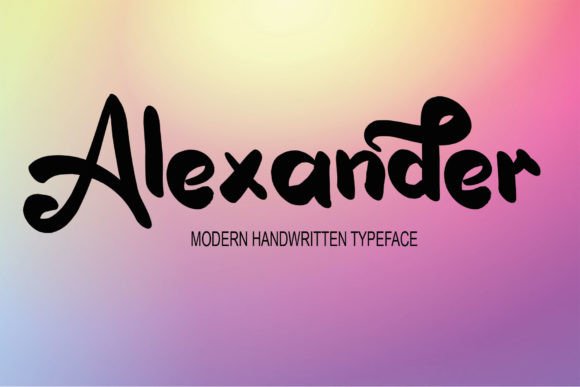
When searching for a typeface that balances personality with clarity, the Alexander font presents a compelling case. This is a handwritten font, crafted with a digital tablet, designed to bring a human touch to professional projects. Unlike many decorative scripts that prioritize flair over function, Alexander is built on a foundation of careful craftsmanship, resulting in a clean, legible, and stylish aesthetic. Its value lies in this specific blend of simplicity and character, making it a versatile tool for designers and communicators who need warmth without sacrificing professionalism.
Understanding the Core Character of Alexander
At its heart, Alexander is a study in controlled expression. The "handwritten" label often brings to mind chaotic scrawl or overly casual scripts. This font defies that expectation. Each letterform has been deliberately shaped, with consistent stroke weight and thoughtful spacing. This careful construction ensures that it remains highly readable across various sizes and applications, from small print on a business card to larger display text on a website banner. The style is modern and uncluttered, avoiding the ornate swirls and unpredictable baselines that can make some script fonts difficult to read or integrate into a cohesive design system.
The distinction of Alexander lies in its neutrality. It doesn't scream for attention with exaggerated features. Instead, it offers a subtle, organic texture that feels authentic and approachable. This makes it particularly effective for projects where the goal is to convey sincerity, creativity, or a personalized service, rather than high-energy excitement or rustic tradition.
Comparing Alexander to Other Handwritten and Script Fonts
The category of handwritten fonts is vast, ranging from elegant calligraphic scripts to gritty, street-art-inspired lettering. Alexander occupies a specific middle ground. When compared to highly formal calligraphy fonts, such as those mimicking copperplate or Spencerian script, Alexander is far more relaxed and contemporary. Formal scripts are ideal for luxury branding, high-end invitations, or projects requiring a sense of timeless elegance, but they can feel stiff or overly ceremonial for a tech startup or a casual e-commerce brand.
On the other end of the spectrum are fonts that simulate quick, messy handwriting. These can inject energy and immediacy but often at the cost of legibility and versatility. They work well for short, impactful headlines or youth-oriented designs but can become tiring to read in longer passages or appear unprofessional in formal business contexts.
Alexander sits comfortably between these extremes. It offers the human touch of a handwritten font without the extremes of formality or chaos. This positions it as a strong alternative when a project requires a font that is friendly yet polished. For instance, if a designer is evaluating options for a boutique coffee shop's menu, Alexander could provide a warm, artisanal feel that is still easy to scan. A highly ornate script might look beautiful but frustrate customers trying to read quickly, while a standard sans-serif might lack the desired personality.
Practical Applications and Best-Fit Scenarios
The utility of Alexander is best understood through its applications. Its design supports a range of uses where clarity and style must coexist.
- Web Design and Digital Interfaces: In digital environments, font rendering and screen readability are paramount. Alexander's clean lines and consistent spacing make it suitable for website headings, subheadings, or pull quotes. It can break the monotony of body text set in a standard serif or sans-serif, adding visual interest without compromising user experience. It is particularly effective for brands in the creative, lifestyle, or wellness sectors.
- Wedding Invitations and Event Stationery: For personal events, the font sets the tone. Alexander's elegant simplicity makes it a versatile choice for invitations, programs, and thank-you cards. It complements both minimalist, modern designs and more traditional layouts when paired thoughtfully with classic serif fonts. Its legibility ensures that important details like dates and addresses are communicated clearly.
- Business Cards and Corporate Collateral: Adding a handwritten element to a business card can make it more memorable. Using Alexander for a name or a tagline can personalize a corporate identity without looking unprofessional. This is especially useful for freelancers, consultants, creative agencies, or any business that values personal client relationships. It conveys approachability and a human-centric brand.
- Advertising and Marketing Materials: Whether for product packaging, social media graphics, or print advertisements, Alexander can highlight key messages. It works well for call-to-action phrases, testimonial quotes, or product features that benefit from a personal endorsement feel. Its style supports advertising for products like artisanal goods, cosmetics, books, or educational services where trust and authenticity are selling points.
Evaluating Tradeoffs and Limitations
No font is universally perfect, and an honest assessment of Alexander requires acknowledging its tradeoffs. Its primary strength—its clean, controlled handwriting style—is also the source of its limitations.
The font's simplicity means it is not the best choice for projects that demand extreme visual drama or historical authenticity. If a design requires a font that mimics 19th-century letterpress printing, a rugged grunge effect, or a futuristic digital display, Alexander will be the wrong tool. Its character is distinctly contemporary and understated.
Another consideration is overuse. Because handwritten fonts carry strong stylistic connotations, using Alexander for all text elements on a page—headings, subheadings, and body copy—can quickly become overwhelming and reduce its impact. It is most effective as an accent font, paired with a more neutral typeface for longer text passages. A common pairing strategy is to use Alexander for display purposes alongside a clean sans-serif like Lato or Open Sans for body text, creating a harmonious balance between personality and readability.
Finally, while its legibility is a strength, it is still a script font. In situations requiring absolute clarity at very small sizes, such as legal footnotes or dense technical data, a traditional sans-serif or serif font will almost always be the more reliable and accessible choice.
Making an Informed Decision
Choosing the right typeface is a critical design decision that influences tone, readability, and brand perception. Alexander should be considered when the project goals align with its specific attributes: a need for a modern, clean, and authentically human touch that does not sacrifice professionalism.
Ask yourself these questions during the evaluation process:
- What is the primary emotional tone? If the answer is approachable, creative, sincere, or personalized, Alexander is a strong candidate. If the tone is formal, authoritative, edgy, or retro, explore other categories.
- What are the key use cases? Will the font be used for short, impactful headlines or for extended reading? Alexander excels in the former. For the latter, plan a complementary pairing.
- Who is the audience? Alexander's contemporary style resonates well with adult audiences (20-50) in creative, professional, and consumer contexts. It may not be the first choice for academic publications or highly technical manuals.
- How will it integrate with other design elements? Consider the color palette, imagery, and overall layout. Alexander's neutral personality allows it to integrate smoothly without clashing, but testing it in context is always essential.
In the landscape of available resources, the Alexander font stands as a practical and stylish option. It is not a font for every situation, but for the right project, it delivers a distinctive blend of simplicity and character that can elevate communication and strengthen visual identity. By understanding its strengths, its proper context, and its limitations, designers and content creators can make a confident choice about whether it is the right resource for their needs.