Evaluating Gevenda: A Modern Classic Display Serif for Design Projects
When selecting a typeface for a design project, the choice often hinges on finding a balance between distinct character and broad utility. Gevenda is a display serif font that positions itself in this space, aiming to offer a modern classic aesthetic. This evaluation explores its features, potential applications, and key considerations to help you determine if it aligns with your creative and practical needs.
Understanding Gevenda's Core Characteristics
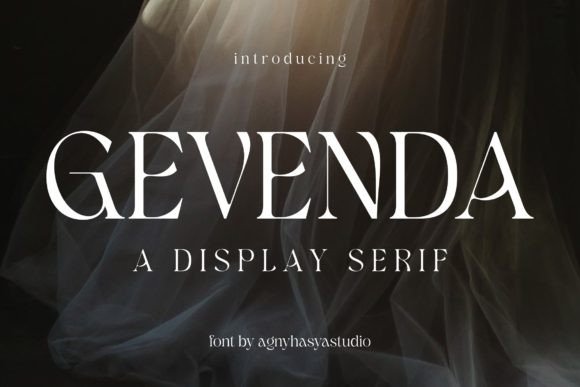
Gevenda is categorized as a Modern Classic Display Serif. This descriptor suggests a design that draws inspiration from traditional serif typography but interprets it with contemporary lines and proportions. The font is described as luxury, elegant, and versatile, indicating its intended use in contexts where sophistication and visual appeal are paramount. It comes in two primary styles: Regular and Italic, providing foundational flexibility for typesetting.
A significant feature of Gevenda is its inclusion of glyph variations, including alternates and ligatures. Alternates are different stylistic versions of the same letterform, while ligatures are special characters that combine two or more letters into a single, often more aesthetically pleasing, unit. These features are not merely decorative; they allow designers to customize the typographic texture of a project, avoiding a generic look and adding a layer of crafted detail. The font is also PUA encoded, which means these special characters can be easily accessed through most design software without requiring advanced technical knowledge.
Potential Applications and Project Fit
The utility of a display serif like Gevenda is best understood through its potential applications. Its design language makes it a candidate for projects where visual impact and brand identity are central. Consider the following scenarios where it could be evaluated:
- Branding and Logo Design: For brands aiming to convey elegance, tradition, or premium quality, Gevenda's serif structure can provide a sense of authority and timelessness. The alternates and ligatures offer tools to create a unique logotype that stands out.
- Print and Editorial Design: Its characteristics suit magazine headlines, book covers, and poster titles. The font is designed to command attention at larger sizes, making it effective for display purposes in editorial layouts.
- Specialized Packaging and Labels: In product packaging for cosmetics, gourmet foods, or luxury goods, the elegant and refined nature of the font can align with brand positioning and shelf appeal.
- Event and Fashion Design: For wedding invitations, event branding, or fashion lookbooks, the font's versatile elegance can help establish a specific mood, from classic romance to high-fashion sophistication.
Key Considerations and Tradeoffs
While Gevenda offers specific strengths, a practical evaluation requires understanding its limitations and the tradeoffs involved.
Primary Use is Display: It is crucial to recognize that Gevenda is a display typeface. This means it is engineered for headlines, titles, and short bursts of text, not for setting long paragraphs of body copy. Using a display serif for extended reading can lead to poor legibility and reader fatigue. Therefore, you will almost certainly need to pair it with a complementary sans-serif or a simple text serif for body content.
Complexity vs. Simplicity: The availability of alternates and ligatures is a benefit for customization, but it also introduces a layer of complexity. Effective use requires a deliberate design eye to select which variations enhance the composition without overwhelming it. If your project requires a no-fuss, straightforward typographic solution, a simpler serif with fewer stylistic options might be more efficient.
Aesthetic Alignment: The "modern classic" and "luxury" descriptors are not universal fits. If your project's goal is to feel rustic, playful, aggressively modern, or minimalist, Gevenda's aesthetic may create a mismatch. Always test the font with your project's core messaging and visual direction.
Decision-Making Insights: Is Gevenda Right for You?
To determine if Gevenda is a suitable choice, consider the following practical questions:
- What is the primary role of the text? If you need a typeface for headlines or titles that require an elegant, classic, or luxurious feel, Gevenda is worth examining. If you need a workhorse font for body text, look elsewhere.
- Do you value typographic customization? If creating unique letterforms through alternates and ligatures is a priority for your brand or project's uniqueness, Gevenda's PUA-encoded glyph set provides that capability. If not, a font with a more fixed character set may suffice.
- What is the project's context? Evaluate the cultural and industry context. A serif with these characteristics may be ideal for a law firm's rebranding, a jewelry advertisement, or a historical book cover. It may be less appropriate for a tech startup's UI or a children's educational app.
- Have you tested it in context? Never decide on a typeface from a specimen sheet alone. Test Gevenda with your actual copy, in your intended layout, and at the intended size. Assess its legibility, spacing, and overall harmony with other design elements.
Exploring Alternatives
If, after evaluation, Gevenda doesn't seem like an exact fit, the market offers many alternatives. You might explore other modern serifs that prioritize different characteristics, such as sharper contrast for high-tech applications or softer curves for a more approachable feel. Some designers may opt for a classic transitional serif for greater neutrality, or a geometric sans-serif if the project demands a more contemporary or minimalist foundation. The key is to match the typeface's personality to the project's voice.
In summary, Gevenda presents itself as a specialized tool for designers seeking to infuse projects with a modern classic, elegant, and versatile serif character. Its value lies in its display-oriented design and customizable glyph features. Its suitability depends entirely on aligning its specific aesthetic and functional strengths with the goals of your design work. A careful evaluation against your project's requirements will reveal whether it is the right choice for your next endeavor.